
1. Climate and protection
The climate in Morocco varies greatly depending on the region and the time of year, so it’s essential to be prepared for heat, cold, and wind.
Protect yourself from the heat
- In summer and spring, temperatures can be high.
- Wear long, lightweight, breathable clothing (cotton or synthetic fabrics that wick away heat).
- Keep fans or other devices for creating a breeze handy.
Sun protection
- Use sunscreen, reapplying it every 2–3 hours.
- Sunglasses, preferably polarized.
- Loose-fitting, lightweight clothing and light scarves draped over the shoulders.
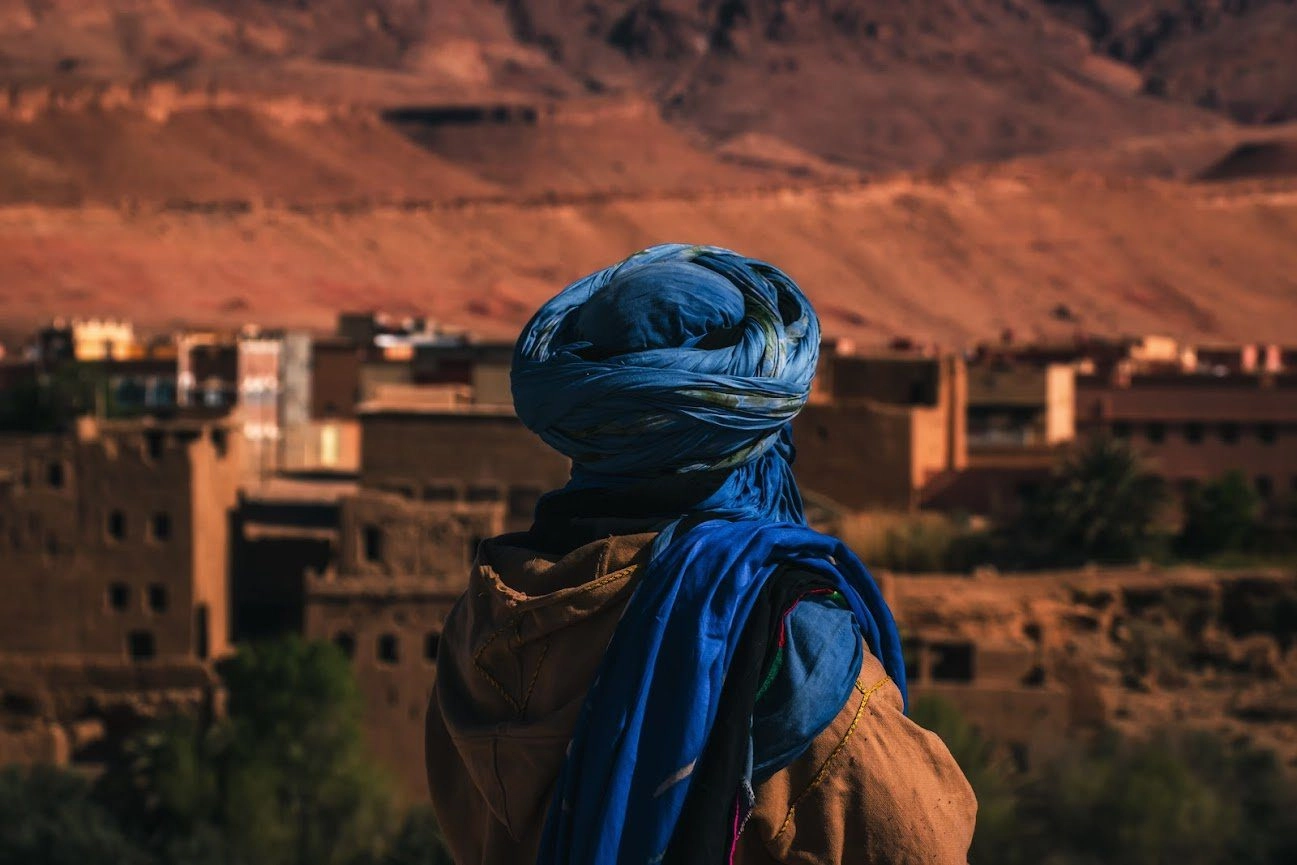
- Protect your head: wear a cap, hat, or Moroccan turban in the desert.
Hydration
- Drink water regularly, even before you feel thirsty.
- Avoid sugary soft drinks; sports drinks are useful for replenishing electrolytes and energy.
- If it’s very hot, splash water on your face, neck, and head.
Stay warm
- In winter, in mountainous regions (High Atlas, Middle Atlas, Rif), and in the desert, the nights are very cold.
- Bring thermal clothing and local warm garments, such as Berber wool.
Protect yourself from wind and sandstorms
- On the Atlantic coast, wear sunglasses and a windbreaker.
- In the desert, cover your eyes and nose with a turban, scarf, or face mask.
- Take shelter indoors until the storm passes.
2. Health and Safety
Make health a priority during your trip:
- Always drink bottled water.
- Avoid eating raw food or drinking beverages from street vendors if you’re not sure about their hygiene.
- Bring water purification tablets or packets in case you need to drink tap water.
- Use antibacterial hand soap before eating.
- Bring insect repellent; the kind you can apply to your clothes is very convenient.
- If you are taking medication, bring your prescription or a medical document.
- Women should bring tampons, as they are hard to find outside of major cities.
- Make sure you’re getting the right medications by checking the name and the active ingredient.
- Avoid contact with wild or stray animals; they can spread diseases.
- Travel insurance: recommended and required for visas; it covers medical expenses, accidents, and theft.
3. Haggling
Bargaining is common in Morocco. Here are a few tips:
- Only haggle if you really want to buy the product.
- Start by cutting the price in half; don’t ask for ridiculous amounts.
- Keep in mind the highest price you’re willing to pay.
- Be firm but polite, and show respect for the salesperson’s work.
- Only accept tea if you actually plan to buy something; it’s a courtesy.
- Support your offer with valid reasons (comparisons or minor flaws).
- Haggle at the end of the day: sellers may be more flexible just before closing time.
4. SIM Card & Internet
If you want to stay connected:
- Decide between your carrier’s roaming service or a local SIM card.
- Roaming: convenient, but expensive.
- Local SIM card: affordable, requires an unlocked phone and a Moroccan phone number.
- Internet cafes remain popular for making calls or using the internet.
- Hotels offer international calling, but be sure to check the rates.
- Pay phones are few and far between; don’t count on them.